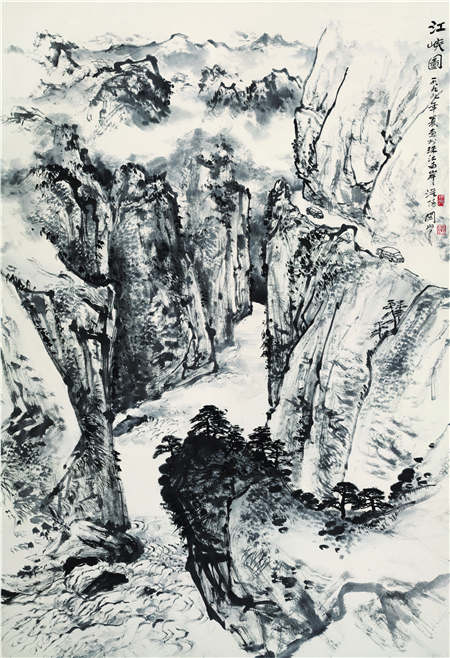
Lingnan Painting School
Introduction
The Lingnan Painting School, named after the Lingnan region in southern China, represents a pivotal movement in the history of Chinese painting. It emerged in the late 19th and early 20th centuries, during a period of significant social and political upheaval in China. This school of thought sought to revolutionize traditional Chinese art by incorporating elements of Western realism and modern techniques, while maintaining the essence and spirit of classical Chinese painting. The Lingnan Painting School is renowned for its innovative approach and profound influence on subsequent generations of artists.
Historical Background
The Lingnan Painting School emerged against the backdrop of the Qing Dynasty's (1644-1911) decline and the subsequent rise of the Republic of China. This period was marked by intense cultural exchanges between China and the West, as well as internal calls for reform and modernization. Artists of the Lingnan School were deeply influenced by these changes and sought to adapt traditional Chinese art practices to the contemporary context.
Founders and Key Figures
Gao Jianfu
Gao Jianfu (1879-1951) is considered one of the founding figures of the Lingnan Painting School. He was instrumental in establishing the Chunshui Studio in Guangzhou, which became a hub for artists who were eager to explore new artistic directions. Gao's vision was to create a "new national art of realism" that would resonate with the realities of everyday life, especially focusing on the experiences of ordinary people.
Gao Qifeng
Gao Qifeng (1889-1933), the younger brother of Gao Jianfu, also played a crucial role in the development of the Lingnan Painting School. His works are characterized by a blend of traditional Chinese brush techniques and Western realism, reflecting the school’s objective to innovate while preserving Chinese artistic heritage.
Chen Shuren
Chen Shuren (1884-1948), another key figure, contributed significantly to the establishment and spread of the Lingnan Painting School. His art often depicted the social and political struggles of the era, and his style was marked by a vivid portrayal of light and shadow, influenced by Western painting methods.
Artistic Philosophy
The Lingnan Painting School was rooted in a philosophy that embraced both innovation and tradition. Artists of this movement believed in the necessity of reforming Chinese painting to make it relevant to the modern world, while still cherishing its historical roots. Their works often focused on themes such as the lives of common people, nature, and national identity.
Influence of Western Art
A defining characteristic of the Lingnan Painting School was its openness to Western art influences, particularly the techniques of light and shadow, perspective, and realism. This integration was not merely an imitation but rather a conscious effort to enrich Chinese painting with new expressive possibilities.
Guan Shanyue and Lingnan Influence
Guan Shanyue (1912-2000) was a prominent figure who was deeply influenced by the Lingnan Painting School. His association with Gao Jianfu and the Chunshui Studio significantly shaped his artistic development. Through his works, Guan Shanyue exemplified the Lingnan School's principles by focusing on the emotional and daily experiences of the people, often portraying them with a modern realism infused with traditional Chinese aesthetics.
Signature Works
One of Guan Shanyue's most celebrated works is the 9-meter-long inkbrush painting Jiangshan Ruci Duojiao (How Beautiful the Motherland Looks), co-created with Fu Baoshi in 1959. This masterpiece exemplifies the Lingnan School’s philosophy, blending grand landscapes with a deep emotional connection to the subject matter.
Legacy and Contributions
Throughout his career, Guan Shanyue remained committed to the Lingnan School's ideals. His numerous donations, such as the 870 paintings and calligraphic works gifted to Shenzhen, highlight his dedication to preserving and promoting this artistic tradition. The Guan Shanyue Art Gallery, established in his honor, continues to showcase his works and the legacy of the Lingnan Painting School.
Lingnan Painting School’s Impact
The Lingnan Painting School significantly impacted the development of modern Chinese art. By bridging the gap between traditional Chinese techniques and Western realism, it paved the way for future generations of Chinese artists to explore new artistic horizons without losing touch with their cultural heritage. The school's emphasis on the emotional resonance of art, combined with its innovative spirit, continues to inspire contemporary artists in China and beyond.








